When your partner is HIV negative

relationships

If you find out you have HIV, having a relationship may seem a problem, especially with someone who is HIV negative. But relationships are just as important for those with HIV as for everyone else.

  1. Negative partners
  2. Safety
  3. Transmission
  4. Monogamy

Negative partners

HIV might make them a bit more complicated, but thousands of people in mixed status relationships are showing that with a little thought and care these can be among the strongest and most rewarding of relationships.

Whether someone tests HIV positive during a long term relationship or they are positive when the relationship starts, it is vital that each of you tests so that you can both be certain about your HIV status. It can be difficult for someone with HIV to say so, but not telling a partner can lead to problems later. The other person may be angry that they weren’t told sooner, or you may accidentally have unsafe sex – if a condom breaks, for example. Also, if a partner is not told and they subsequently contract HIV as a result of unprotected sex, this is against the law.

There is still fear and lack of understanding about HIV, so many positive people know how it hurts to be rejected by partners or potential partners, especially if they turn you down in an insensitive way. Rejection happens to the best of us. Try not to take it personally – it’s a reflection of their issues, not of you.

Some people tell potential partners their HIV status as soon as possible, so they don’t invest feelings in someone who will later walk away. You can look at rejections as a way of sorting out the people who were never going to make you happy anyway. The important thing is not to hide away or give up hope!

In a mixed relationship you might think a problem is HIV-related but it might not be underneath. That is why it can help to talk to someone outside your relationship, such as a counsellor. One of you might take on more of the worry, and if sharing this burden with your partner isn’t possible, talking to someone like a counsellor (either together or on your own) can really help. Find one by contacting THT Direct or using our Service Finder.

Safety

When one of you has HIV and the other doesn’t, you both might worry about the HIV negative partner becoming infected.

This is understandable, and these concerns are often strongest in the early days after finding out a partner has HIV.

But worries can grow out of proportion to the real risk, putting a relationship under stress. Over time couples often get their concerns into proportion, and are then able to take precautions and enjoy a sex life with the least risk possible. So it helps to fully understand the risks associated with different types of sex.

You might feel that HIV is a barrier to getting close, and that condoms get in the way. If you’re the HIV negative partner you may start to feel that you are somehow immune from being infected by your partner. You may even feel that if you both had HIV it would result in more sexual intimacy, no more worries about getting infected and the chance to support each other with having HIV.

But such thoughts store up problems for the future that will hurt your relationship. Two of you with HIV in your relationship will make things more complicated than just one. And someone who allows their partner to contract HIV could end up feeling angry with themselves.

Talking to a counsellor will help you to work out ways of getting close sexually without risking HIV. Unprotected sex isn’t the only type of intimacy; deep and honest communication is a powerful way to get closer to one another.

Using condoms isn’t easy, and feelings of love and passion can lead to unprotected sex. If this happens, you shouldn’t assume HIV has been passed on. It is never too late to go back to using condoms.

In an emergency, such as when a condom’s not used or it breaks, there's Post Exposure Prophylaxis (PEP), a treatment that can stop a partner getting HIV. It's best started within 24 hours of unprotected sex and no later than 72 hours afterwards. HIV clinics can give couples PEP to keep at home in case they need it. 

  • Find out if you might have put your partner at risk of getting HIV here.

After unprotected sex you might feel angry, stressed or lacking control. A counsellor can help you work out why unprotected sex happens and how to avoid it.

Transmission

Keeping an uninfected partner HIV negative is important but unrealistic worries can interfere with your relationship.

All evidence points to almost all people acquiring HIV through unprotected sex, mother-to-child transmission or sharing needles.

You will worry less if you know the facts about the risks of different types of sex. During sex HIV can be passed on in blood, semen, pre-cum, vaginal fluids and anal mucus; but not in urine, tears or sweat.

HIV is not passed on every time unprotected sex happens - although it might be passed on any time it happens. If a condom is not used once (or even a few times) it does not mean that the other person must now be infected - only a test will tell. Both of you should talk to each other about what level of risk you feel OK taking.

Anal sex

The highest HIV risk is if the uninfected person takes the receptive role in anal sex. The risk is lower if the person takes the insertive role but a real risk remains.

Vaginal sex

Vaginal sex without a condom is also high risk but less so than anal sex. Most people with HIV in the world got it through vaginal sex. The risk is greater for the uninfected woman than for the uninfected man but the risk for both is real.

Condoms

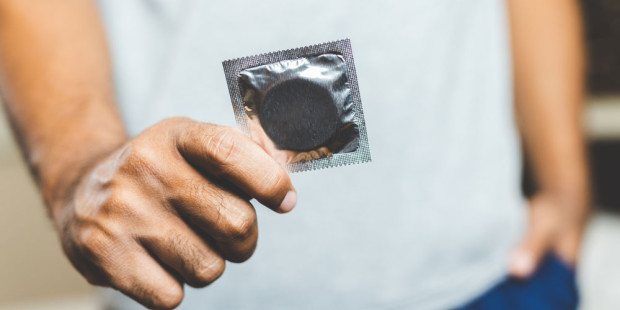
Condoms offer good protection against HIV - other types of contraception don’t protect against it at all. Condoms for vaginal and anal sex greatly reduce risk but they can sometimes come off or break. If this happens PEP can stop someone from getting HIV.

Oral sex

The risk of getting HIV from performing oral sex on someone is very low. The risk from having oral sex performed on you is even lower and may be impossible. If you are worried about oral sex, using a condom or latex barrier is an option.

Other sexual activities

Deep kissing is safe, and masturbating someone carries no risk if skin on the hand is healthy.

Everyday activities

Despite multiple studies in the USA and Europe, there have been no reports of HIV transmission through everyday domestic contact.

Sharing a razor presents a small theoretical risk of transmitting HIV, but sharing razors is never advisable due to the possibility of transmitting bacterial and viral infections including Hepatitis B or C.

There is no evidence that sharing kitchen items such as cutlery poses any risk. HIV is not transmitted in saliva.

Regarding cuts and blood spills, an HIV positive person with an open wound should not be attended to by someone with an open wound themselves. Wounds can be washed with soap and warm water. Antiseptic is useful for preventing all sorts of infections but is not necessarily required. Spilt blood can be cleaned with hot water and normal household cleaning products.

Viral load

Viral load is how much HIV is in your body fluids (see What’s Happening? for details). The higher someone’s viral load, the more HIV is in their body fluids, meaning a greater risk that the virus will be passed on during unprotected sex.

HIV treatment usually brings your viral load down, often so low that it is classed as ‘undetectable’. This doesn’t mean that all HIV has gone – it is still there but in amounts too small to detect.

There is a lot of discussion about how likely it is for someone who has had undetectable viral load for at least six months to pass on HIV. Some experts in Switzerland say HIV will not be passed on within a couple if they are monogamous and free of sexually transmitted infections; but there are cases where people with undetectable viral load have infected others. See the ‘Swiss statement’ on the Monogamy tab for details.

Before you and your partner make any decision about not using condoms, get advice from an HIV specialist or a service such as THT Direct.

Monogamy

You should talk to your partner and agree whether your relationship will be monogamous (no sex outside the relationship) or ‘open’ (sex with others allowed). There are risks in not discussing it and assuming that your partner agrees with you. Some people who think they are in a monogamous relationship find out that their partner has had sex with others.

Both monogamous and open relationships can bring benefits and challenges. For example, some couples in monogamous relationships say they enjoy feeling both physically and emotionally committed to only one person. However, they may feel frustrated if they have a higher or lower sex drive than their partner.

Some couples in open relationships say they enjoy the sense of freedom and variety it can bring, but it can also highlight any feelings of jealousy or insecurity within the relationship. Mutual trust and honest communication are vital in both monogamous and open relationships.

If you both agree to be monogamous it is important that you discuss what would happen if one of you broke this agreement. If either of you feels you must hide the fact that you’ve had sex outside the relationship, it can seriously threaten the relationship.

One advantage of monogamy is that sexually transmitted infections (STIs) such as syphilis, herpes, chlamydia, gonorrhoea and hepatitis C cannot come into the relationship. If one of you has HIV, STIs can be harder to treat and, until they are treated, your HIV viral load increases. This means that there is more HIV in the positive partner’s blood, semen, pre-cum, vaginal fluids or anal mucus, making it more likely that HIV will be passed on.

If you have sex outside the relationship, condoms make it less likely that you’ll pick up other sexually transmitted infections (and give them to your partner). But some can be passed on despite using condoms and through oral sex.

The Swiss statement

Swiss HIV experts have said that an HIV positive partner on treatment with an ‘undetectable’ viral load for at least six months won’t pass on the virus during unprotected sex – so long as it is within a monogamous relationship free of STIs. This has become known as ‘the Swiss statement’. If an STI enters the relationship from outside it will make the viral load of the HIV positive partner go up, increasing the risk that HIV is passed on.

However, other experts do not agree with the Swiss statement because there are cases of people with undetectable viral load infecting others, including inside monogamous STI-free relationships.

You should both get advice from an HIV specialist or or THT Direct before making any decision about not using condoms.


Rate:

Empty Star Empty Star Empty Star Empty Star Empty Star (No votes cast) Please log in or register to vote. What's this?

Save:

Please log in or register to add this article to My favourites. What's this? Adding an article to My favourites will allow you to easily come back to it later or print it.


Your comments

You will need to be logged in before you can leave a comment.

Please log in using the form on the top right of the page or register.

The Information Standard: Certified member

This article was last reviewed on 31/10/2012 by T. Kelaart

Date due for the next review: 30/9/2014