Where can I get an HIV test?
You can get an HIV test in person or order tests online, with free and paid-for options. Many tests will provide you with a result in a just a few minutes.
You can test in person at:
- A sexual health clinic.
- An HIV testing centre, including those run by Terrence Higgins Trust.
- A GP/family doctor.
If you test at a sexual health clinic, testing centre or a GP then your test will be free. If you test at a private clinic, you will have to pay.
You can also order tests online including:
- A self-test, which you take yourself and see the result within a few minutes.
- A postal test, where you take a sample yourself and send it off to a lab, who will then contact you with your result.
We sell HIV self test kits for just £16 including delivery. We are also able to offer free tests to eligible users in a number of locations. There are also free tests available for those unable to afford our discounted price. Visit our HIV self test ordering website for full details.
Try our free online HIV test finder to see what online testing is available in your area.
If you’re using a self test, look out for the CE mark.
How long does it take to get results from an HIV test?
How quickly you get the results of your HIV test depends on what kind of test you take.
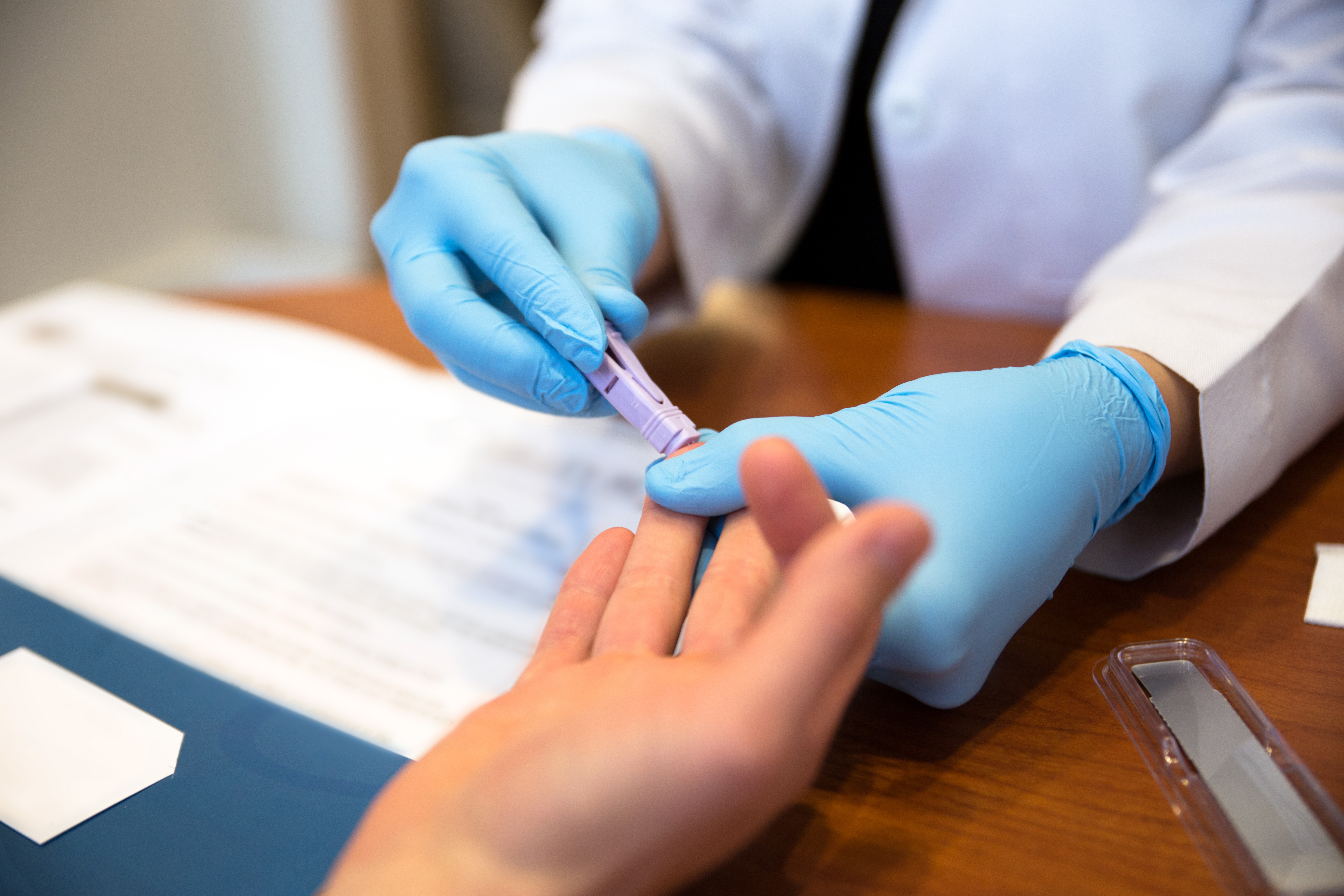
Many services offer rapid testing, which means a finger-prick test or oral swab that will give you a result within minutes.
A self-testing kit ordered online and done at home will normally give you a result up to 15 minutes, depending on the kit.
A blood sample taken at a testing centre will be sent to a lab, with results ready within a day or up to a week later.
If you use postal testing, the lab will normally contact you a week or so later with your result.
How does an HIV test work?
An HIV test is a blood test. It does not detect HIV itself, but looks for a protein found in an HIV cell, or an antibody made by the body to fight HIV.
Can HIV test results be wrong?
HIV tests in the UK are very reliable. They can occasionally produce a positive result which is then found to be negative when tested again. This is called a false positive and is rare, occurring in less than 1 in 1,000 cases.
It is possible to get a false negative result, but these most often occur when people test in the first few weeks after infection, during the ‘window period’ (the time between potential exposure and when a test can accurately detect an infection). During these first few weeks, the virus's markers (like antibodies or antigens) may not have reached detectable levels in the body.
What are testing windows?
The HIV window period is the time between being exposed to HIV, and when tests will be able to detect the infection in your body. Inside the testing window, you might have acquired HIV but not have enough antibodies in your blood for a test to pick up on.
National testing guidelines set out a 90-day window for HIV self-tests.
Blood tests that you send off to a lab and those available at sexual health clinics have a testing window of 45 days.
In practical terms, this means that a self-test tells you what your HIV status was 90 days ago, while a blood test tells you what your status was 45 days ago.
It’s important to get tested regularly to stay on top of your sexual health.
When should I take an HIV test?
What testing service you should use, and which type of test, depends on when you might have been exposed to HIV. Signs of HIV infection don’t show up in the blood right away. It normally happens within four weeks of infection, but can be longer.
If you think you might have been exposed to HIV in the last 72 hours (three days), you can take post-exposure prophylaxis (PEP) to help stop an infection from happening.
If your risk was recent, then your test provider will probably advise you to take a test immediately, followed by a second one a few weeks later. The second test will pick up any infection the first one may have missed.
If your risk was in the last three months, make sure you tell the person testing you, as it may affect the type of test you’re given.
A self test is not guaranteed to pick up an infection that’s occurred in the previous three months. If you think you’ve been exposed in the last three months, you should get a test in person.
Very occasionally it can take up to three months for antibodies to appear in the blood, so an HIV negative result is only totally accurate if three months have passed between the test and the last time a risk was taken. However, a negative result four to eight weeks after taking a risk is a very good sign that HIV infection hasn’t happened.
How often should I test for HIV?
Testing at least once a year for HIV and other sexually transmitted infections (STIs) is good sexual health practice for everyone who is sexually active, even if you know you haven’t been at risk of infection. Depending on how many different sexual partners you have in any one year, you might want to consider testing more regularly.
Some groups are at higher risk of HIV. If you belong to one of these groups you should get tested regularly for HIV and other STIs, at least annually or every three months if having sex without condoms with new or casual partners:
- Gay, bisexual and other men who have sex with men (MSM)
- Black African men and women
- Trans women, trans men, and non-binary people who have sex with MSM
When in doubt, you can always get a test if you are worried you might have been exposed to HIV or other STIs.
Why is it important to test for HIV?
If you have HIV, finding out means you can start treatment, stay healthy and avoid passing the virus onto anyone else. The sooner you start treatment, the less likely you are to become seriously ill. People who are diagnosed early and get on treatment can expect to live a normal lifespan.
Once you’re on effective treatment and your viral load is undetectable then you can't pass the virus on to anyone else.
If you wait to test, the virus could do a lot of damage. There is a lot of support available for people who test positive.