Whether you were diagnosed with HIV during a relationship, or you knew you were living with HIV when the relationship started, it’s important for your partner to know their status too.
Remember that if you’re on treatment and have an undetectable viral load, you can't pass on HIV.
Should I tell my HIV-negative partner about my status?
You may find it difficult to tell a partner that you have HIV, but not telling them can lead to problems later.
This used to be more of an issue when we understood less about the link between viral load and infectiousness. We now know that if you’re taking HIV medication and have an undetectable viral load, you can't pass on HIV to your partner.
If you have a detectable viral load, have unprotected sex and don't tell your partner, they may be angry that they weren’t told sooner. If you don’t tell your partner about your status and they subsequently contract HIV as a result of having unprotected sex with you, you could be prosecuted.
Can I pass HIV on to my partner from anal sex?
If you have a detectable viral load, the highest risk of passing on HIV is if your partner takes the receptive role in anal sex. If you take the receptive role, the risk is lower but it is still possible to pass on HIV.
Can I pass HIV on to my partner from vaginal sex?
If you have a detectable viral load, vaginal sex without a condom is also high risk but less so than anal sex.
The risk is greater for the receptive partner but the risk for both is real.
Can I pass HIV on to my partner from oral sex?
If you have a detectable viral load, the risk of passing on HIV from having oral sex performed on you is still very low.
The risk from performing oral sex on an HIV-negative partner is even lower.
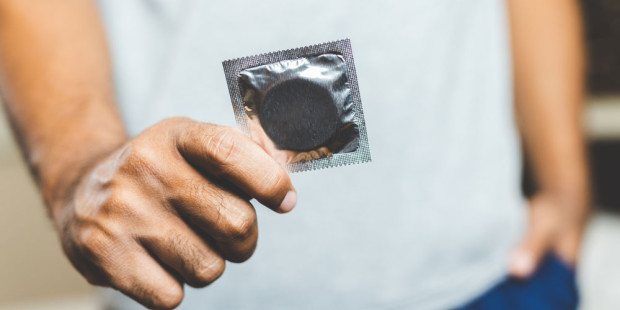
If you're worried about oral sex, you can use a condom or latex barrier, but if your viral load is undetectable then there is no risk.
Can I pass HIV on to my partner from other sexual activities?
You cannot pass HIV on to a partner from kissing.
Masturbating someone usually carries no risk. HIV transmission could only happen if sexual fluids from the person with HIV enter open wounds (burns, cuts or rashes) on the skin of the person who does not have HIV. This is only a risk if the person with HIV has a detectable viral load.
Can I pass HIV on to someone I live with?
There have been no reports of HIV transmission through everyday domestic contact.
There is potentially a small risk of transmitting HIV through sharing a razor, but sharing razors is never advisable due to the possibility of transmitting bacterial and viral infections including hepatitis B or C.
There is no evidence that sharing kitchen items such as cutlery poses any risk. HIV is not transmitted in saliva.
HIV can be passed on through blood. A person with HIV who has a detectable viral load and an open wound should not be treated by someone who has an open wound themselves. Wounds can be washed with soap and warm water.
Clean up spilt blood with hot water and bleach (one part bleach, nine parts water), while wearing rubber gloves.
Again, during the everyday activities that are considered ‘risky’, the person with HIV can't pass on the virus if their viral load is undetectable.
PEP and PrEP
In an emergency, such as after condomless sex, there is a treatment called post-exposure prophylaxis (PEP) that can stop a partner getting HIV.
Pre-exposure prophylaxis (PrEP) is a course of HIV drugs taken by an HIV-negative person to prevent HIV.
Monogamous relationships and open relationships
You should talk to your partner and agree whether your relationship will be monogamous (no sex outside the relationship) or open (sex with others allowed).
There are risks in not discussing it and assuming that your partner agrees with you. Some people who think they are in a monogamous relationship find out that their partner has had sex with others.
Both monogamous and open relationships can bring benefits and challenges. For example, some couples in monogamous relationships say they enjoy feeling both physically and emotionally committed to only one person. However, they may feel frustrated if they have a higher or lower sex drive than their partner.
Some couples in open relationships say they enjoy the sense of freedom and variety it can bring, but it can also highlight any feelings of jealousy or insecurity within the relationship.
Mutual trust and honest communication are vital in both monogamous and open relationships.
If you both agree to be monogamous it's important that you discuss what would happen if one of you broke this agreement. If either of you feels you must hide the fact that you’ve had sex outside the relationship, it can seriously threaten the relationship as well as both partners’ sexual health and presents a risk of sexually transmitted infections (STIs) such as syphilis, herpes, chlamydia, gonorrhoea and hepatitis C.
If you have sex outside the relationship, condoms make it less likely that you’ll pick up other STIs (and give them to your partner). But some can be passed on despite using condoms and through oral sex.
How can I deal with rejection?
There’s still fear and lack of understanding about HIV, so many people living with HIV know how it hurts to be rejected by partners or potential partners, especially if they turn you down in an insensitive way.
Rejection happens to the best of us. Try not to take it personally: it’s a reflection of their issues, not of you.
Some people tell potential partners their HIV status as soon as possible so that they don’t invest feelings in someone who might later walk away.
You can look at rejections as a way of sorting out the people who were never going to make you happy anyway. The important thing is not to hide away or give up hope.